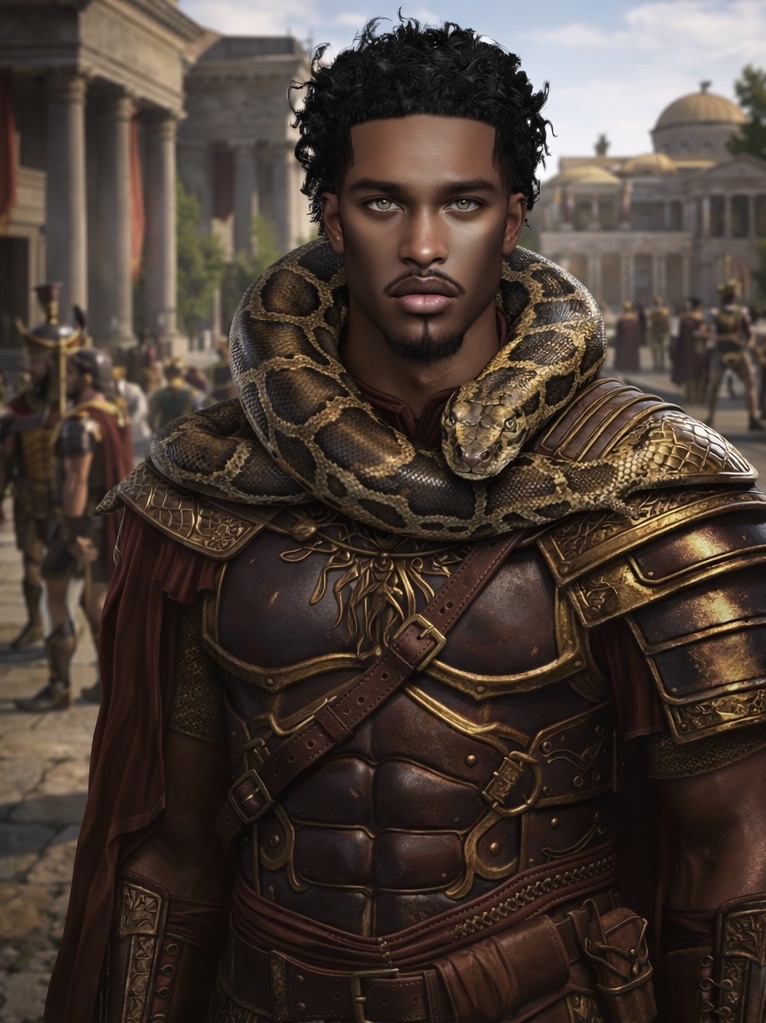
Born in the river-port city of Schendi, where the great jungles press close and the rhythms of life are shaped by trade, river currents, and the drums of native tribes. His mother was a woman of Schendi—strong, proud, and deeply rooted in the traditions of her people. His father was not of that land, but a wanderer from the northern clans, a man of the fierce and lesser-known Tengdur Clan.
The child was called Kito, meaning "First Born" in the tongue of his mother’s people. It was a placeholder—because in many northern traditions, the right to name a son belongs to the father, and his father was gone. His mother raised him among her kin with the quiet strength of her people. In those early years, Kito knew only warmth—bare feet on packed earth, the scent of river mud and spice, and the watchful lessons of survival beneath the southern sun.
He learned faster than most. There was always something sharp in him, something aware. For the first five or six years of his life, Kito knew only the world of Schendi until his Northern Father returned. The warrior had not known of the boy, but upon learning the truth, he stayed. For a few years, father and son lived in uneasy harmony with the mother’s people. It was during this time that Kito first glimpsed the harder discipline of the north—lessons in silence, observation, and the beginnings of combat.
But Gor is not gentle with such fragile balances. Shortly after his father’s return, his mother died. With her passing, the last tether holding Kito to Schendi was gone. He decided to leave with his father and was taken north, where he was finally named Ejike Tengdur. Yet, out of respect for his late mother, his father continued to call him Kito, the name by which he was eventually introduced to the clan.
Under his father’s hand, Kito was reforged. There was no softness in the training—only discipline and expectation. He learned the bow first, not as sport, but as survival: to strike from distance, to see without being seen. The dagger followed, an extension of instinct. The sword he learned as well, but it never felt like his own. Years passed, and the boy became driven. Ejike did not shrink from combat; he sought it. In the clash of steel and the draw of the bowstring, there was truth.
Then, fate took what remained of his past. His father died. Although the clan supported him, Kito chose to walk his own path, a lesson his father had drilled into him. After a final send-off feast, he departed the North and landed in the island city of Tyros. Here, warriors are forged in conflict and loyalty is measured in blood. He proved himself by action, rising through the ranks until he stood as a Sergeant—a leader of men respected for results, calm under pressure, and lethal when needed.
But no city stands forever. When Tyros fell, Ejike endured. The years that followed carried him across the world, sharpening him further. Time carved away the boy, leaving behind something harder and quieter. Yet, no matter how far he walked, two truths remained: He was born in Schendi, and he was forged in the north.
After years on his own, he learned that the Tengdur had settled in the city of Selnar of Cos. Without further debate, Kito sent word to his cousin who now held leadership over the clan. A new life awaits him in Selnar, returned at last to the fold, with his clan held tight to his side so the man might never have to leave again.